
Chamber Music of Family Restaurants: Loiseau & Roca Siblings
Emma Lombard
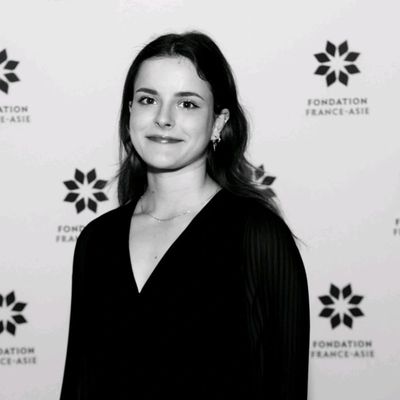
Based in Paris with strong ties to Seoul, Emma Lombard is a graduate of Intercultural Management at ISIT (Paris Panthéon-Assas University), following a degree in International Relations from the University of Montreal and an academic exchange at Sungkyunkwan University in Seoul. Her professional experience spans institutional diplomacy, public affairs, and cultural exchange, including her recent role coordinating programs at the Fondation France-Asie, where she worked closely with ministries, embassies, and institutional partners. A multilingual writer and active member of the Franco-Korean think tank KEY Korea Europe & You, she contributes to published research on economic and cultural dialogue between South Korea and Europe.
Chamber music asks something paradoxical of its performers: it demands that each musician listen as much as they play. Without a conductor, there is no single authority to arbitrate tempo, dynamics, or interpretation. The ensemble must negotiate these in real time, through glances, breath, and the accumulated trust of years of playing together. The result, when it works, is a form of collective art: precise, intimate, and alive to the moment.
Some family restaurants operate in exactly this way. They are not orchestras, directed from above by a singular genius. They are chamber ensembles: small, interlocking, and running on mutual knowledge rather than hierarchy.
The Loiseau Sisters at Groupe Bernard Loiseau in France, and the Roca Brothers at El Celler de Can Roca in Spain, offer two of the most instructive examples of this model. Together, they illuminate what it means for a family to transmit a culinary heritage not as a fixed score, but as a living practice of shared performance.
Coordinating Multiple Voices in an Ensemble
After Bernard Loiseau’s death in February 2003, Groupe Bernard Loiseau faced not only a managerial transition but the painful question of how to continue a house so closely identified with one creative presence. The founder had built La Côte d’Or around a highly centralised, entrepreneurial model in which he was at once chef, spokesman, creative director, and host (Paris and Leroy, 2013).
Bernard Loiseau’s cuisine, marked by the "nouvelle cuisine" principles of lightness, simplicity, and the supremacy of taste, bore his signature so completely that when he passed away, staff and customers alike struggled to imagine what the house would sound like without him.
What followed was, in musical terms, the question every chamber ensemble faces when it loses its founding member: can the music continue, and if so, who carries the melody? The answer, at Groupe Bernard Loiseau, came not from a single successor but from a distribution of responsibilities across the family.
Dominique Loiseau, Bernard's widow, assumed strategic leadership not as a replacement chef, but as the guarantor of the house's identity and long-term direction. She hired a general manager to formalise operational processes, took personal charge of public relations and guest reception, and made the crucial decision to support Patrick Bertron, the longtime sous-chef, as head of the kitchen. In doing so, she enacted the core principle of chamber music: no single voice was asked to carry everything. Each role was distinct, defined, and accountable to the whole (Paris and Leroy, 2013).
The transition was not painless. Some long-serving dining-room staff, deeply attached to Bernard Loiseau’s style, found Bertron’s gradual innovations difficult to accept. They felt that he was departing from what had made the house great, introducing complexity and variety into a cuisine that had been defined by its austere focus on a single main product and two complementary ones. Despite these challenges, the restaurant thrived. By 2013, Bertron’s cuisine had found its voice within the house’s tradition, and the restaurant had maintained its place among France’s leading gastronomic institutions (Paris and Leroy, 2013). In September 2023, Bertron passed the kitchen to his longtime second, Louis-Philippe Vigilant, while remaining involved with the house as an ambassador (Gault & Millau, 2023).
Bérangère and Blanche: A Sister-Led Succession
Importantly, these succession plans were accompanied by a generational transmission under the leadership of Bernard Loiseau’s two daughters. Bérangère Loiseau joined the group in 2013 to create its marketing department, became Vice-President in 2021, and assumed the presidency in 2023, translating the Loiseau inheritance into institutional strategy, brand coherence, and long-term development. Her sister Blanche, trained as a chef, now leads the kitchen of "Loiseau du Temps," the group's bistrot in Besançon (L'Hôtellerie Restauration, 2025).
With Blanche’s return to the family business in 2021 after training and travelling abroad, including formative experiences in Japan, a Loiseau family member was once again behind the stove at Groupe Bernard Loiseau.
For Bertron, who had carried the kitchen after Bernard’s death, training Blanche was not simply the education of a young chef; it was a symbolic return of culinary knowledge to the family line. Blanche herself described it as the “passage de flambeau” she could not receive directly from her father (GE RH Expert, 2022).
Yet Blanche’s legitimacy is not only genealogical. In Japan, she had worked in traditional kaiseki kitchens, initially washing dishes and observing before gradually earning a place in a highly codified environment. She returned to the family business with a broadened understanding of discipline, seasonality, humility, and cross-cultural management. In 2024, there was a chance to open a restaurant in Tokyo, and she came to divide her time between France and Japan (CCI France Japon, 2026).
The two sisters’ respective roles, strategic and entrepreneurial for Bérangère, culinary and creative for Blanche, reproduce within the family the same logic of complementary differentiation that characterises any chamber ensemble.
"Trouver l'équilibre entre l'héritage et l'innovation est un défi quotidien (“finding the balance between heritage and innovation is a daily challenge”),” Bérangère explained in a 2025 interview, invoking her father's formula of the "figuratif moderne": the revisiting of terroir classics at the highest level of refinement (L'Hôtellerie Restauration, 2025).
Three Parts, One Composition
At El Celler de Can Roca, the chamber music structure was not inherited under crisis but deliberately constructed from the outset. The restaurant grew from a family deeply rooted in hospitality: the brothers' parents, Josep Roca and Montserrat Fontané, ran Can Roca, a popular neighbourhood restaurant in Girona, and it was in that working-class dining room that Joan, Josep and Jordi first absorbed the rhythms and values of cooking for others (Meneguel, Mundet and Aulet, 2019; Groysberg, Hecht and Baden, 2021).
When Joan and Josep opened El Celler in 1986 in a building adjacent to Can Roca, they were already performing as a duo: Joan in the kitchen, Josep managing the dining room and wines. When Jordi joined the team definitively in the late 1990s as pastry chef, the trio was complete and with it, the full range of the ensemble.
The distribution of roles at El Celler is very precise, and it maps directly onto the logic of chamber music. Joan Roca, the head chef, is what his collaborators describe as the architect: methodical, serene, a craftsman who translates the wildest ideas into executable dishes without losing their emotional force.
Josep, the sommelier, is the house's communicative intelligence with an unusual capacity to move between the worlds of wine, food, and feeling, and to articulate for guests what the cooking is trying to say.
Jordi, the youngest by fourteen years, is the ensemble's transgressive voice, the one whose imagination consistently pushes the others past their comfort zones. In musical terms, Joan provides the harmonic foundation, Josep the melodic line, and Jordi the unexpected variation that keeps the composition alive.
A Distinctive Philosophy of Heritage
What makes this model genuinely chamber-like is not merely the division of labour, but the quality of communication it enables. Decisions at El Celler are not made through formal hierarchy. They emerge from a continuous dialogue in the kitchen, at the research and development centre La Masia, and at the lunch table at Can Roca which the whole team shares every day.
Accompanying good food is a distinctive philosophy of heritage. Wine inspires dishes; dishes suggest wine pairings; desserts reinterpret perfumes; perfumes become the starting point for a new menu sequence. This creative conversation moves between the brothers laterally, not vertically. Each brother hears the same melody differently, and it is precisely the difference that generates the richness.
Heritage, for the Rocas, is not a fixed repertoire to be preserved intact but a living score to be continuously reinterpreted (Meneguel, Mundet and Aulet, 2019). The Roca brothers were born a hundred metres from the restaurant. They eat lunch every day at their parents' table. Their menu items carry titles like "Growing up in a Bar," a miniature cardboard model of Can Roca surrounded by snacks representing their childhood memories, or "The World," a globe loaded with the culinary traces of their international travels (Groysberg, Hecht and Baden, 2021).
Each new dish is both a variation on a theme and a statement of where the ensemble stands today. Through their menu, the brothers translate the surrounding landscape, local traditions and their own family memories into a cuisine that stays rooted in place even as it continually reinvents itself (Meneguel, Mundet and Aulet, 2019).
Ensemble Discipline in a Family Restaurant
To maintain the precision of a chamber ensemble over decades is not merely an artistic challenge; it is a gruelling physical and emotional discipline. In traditional, conductor-led kitchens, the stress of the performance is often absorbed through rigid hierarchy and fear. But in a collaborative, family-led ensemble, the sustainability of the human instrument becomes paramount.
At Groupe Bernard Loiseau, the transition from Bernard’s highly centralized, paternalistic leadership to a distributed family model required a form of discipline among various players that continued as the Loiseau sisters eventually took over. By defining clear, accountable roles for the family and the kitchen, Dominique Loiseau proved that the intimate, hospitable atmosphere of a family home could be sustained through structured collaboration rather than singular leadership. As the Loiseau sisters joined the ensemble, the performance did not falter; it was simply re-arranged so the players could survive it.
At El Celler de Can Roca, this discipline was built directly into the restaurant’s infrastructure. Since 2016, the brothers have run a double-shift system, replacing the entire lunch crew with a fresh team for dinner to combat the industry's notorious burnout rates. They also brought an in-house psychologist into the fold to manage the interpersonal friction between the highly transient kitchen interns and the more permanent dining room staff (Cabrera and Hugas, 2020).
This was not done out of soft sentimentality, but out of a practical understanding of what Ulloa, Roca, and Vilaseca (2017) call "sensible skills." Culinary excellence does not reside in the isolated sensory talents of a single genius, but in a shared, communal vocabulary cultivated across the entire team. By closing the restaurant every Tuesday lunchtime for collective training sessions, covering everything from sensory physiology to the history and literature of the regions they visit, the Rocas treat their staff not as interchangeable gears in a machine, but as musicians who must rehearse together to stay in tune (Groysberg, Hecht and Baden, 2021).
Conclusion: Imagining the Future as a Chamber Ensemble
What the Loiseau Sisters and the Roca Brothers ultimately share is how the family recipe is not complete until it is played, until the team gathers around the pass, until the dining room fills, and until the evening begins its unfolding sequence of courses, wines, conversations, and silences.
This understanding has consequences for how the current generation of these family enterprises imagine their future. At Groupe Bernard Loiseau, the two sisters are now writing the next chapter: Bérangère leads the group's strategic development while Blanche embodies its culinary continuity, together ensuring that the transmission does not stop at the first succession but extends into the family's second generation (L'Hôtellerie Restauration, 2025).
In contrast, at El Celler de Can Roca, the three brothers have long described the restaurant as a project imagined and built by the three of them together, rather than a dynasty designed from the outset to pass automatically to the next generation. The chamber ensemble, in this reading, is complete in itself, not necessarily a legacy to be perpetuated, but a performance to be honoured in its own time (Groysberg, Hecht and Baden, 2021).
The Loiseau and Roca cases show two forms of chamber heritage: one ensemble rebuilt after the loss of its founding soloist, the other composed from the beginning around three sibling voices. One seeks renewal through the next generation; the other may remain inseparable from the original trio. Family heritage does not always mean indefinite dynastic continuation. It can still be powerful through the integrity of a completed performance. In both cases, the value of the family restaurant lies not simply in preserving the score, but in knowing when, and with whom, it can still be played.
References
Bourge, M. (2023). 'Patrick Bertron leaves Relais Bernard Loiseau'. Gault&Millau. Published 12 September 2023.
Cabrera, C., & Hugas, J. (2020). El Celler de Can Roca: Innovation in service (Case ED0015). ESADE Business School, CLADEA BALAS Case Consortium.
CCI France Japon. 2026. “Itinéraires singuliers podcast - Blanche Loiseau, between heritage and boldness: a French chef in Japan.” Published 4 March 2026.
Clauzel, A., Delacour, H. and Liarte, S. (2019). 'When cuisine becomes less haute: The impact of expert ratings on consumers' legitimacy judgments'. Journal of Business Research. https://doi.org/10.1016/j.jbusres.2019.10.059.
Eburne, J.P. (2010). 'The Chef Drive: Cooking Beyond the Pleasure Principle'. Contemporary French and Francophone Studies, 14(2), pp. 169-177.
GE RH Expert. 2022. “Côte-d’Or : Blanche, la fille du chef Bernard Loiseau, reprend le tablier de son père à Saulieu.” Published 11 February 2022.
Groysberg, B., Hecht, E. M. S., & Baden, K. C. (2021). The Roca brothers: Innovation in gastronomy (Case 9-421-017). Harvard Business School Publishing.
L'Hôtellerie Restauration (2025). Bérangère Loiseau, prête à écrire la suite de l'histoire du groupe Bernard Loiseau. Published 2 April 2025.
Meneguel, C.R.A., Mundet, L. and Aulet, S. (2019). 'The role of a high-quality restaurant in stimulating the creation and development of gastronomy tourism'. International Journal of Hospitality Management, 83, pp. 220-228.
Paris, T. and Leroy, F. (2013). 'Managing Transition in an Artistic Company with Entrepreneurial Management: A Case Study of Groupe Bernard Loiseau'. International Journal of Arts Management, 15(3), pp. 42-55.
Ulloa, A.M., Roca, J. and Vilaseca, H. (2017). 'From Sensory Capacities to Sensible Skills: Experimenting with El Celler de Can Roca'. Gastronomica, 17(2), pp. 26-38.